US strikes on Iran's three main nuclear facilities have once again raised concerns that Tehran might shut down the Strait of Hormuz - one of the world's most critical chokepoints, through which a fifth of global oil and gas supply flows.
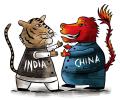
India and China have announced a series of measures aimed at improving their relationship, including maintaining peace along the border, reopening border trade, and resuming direct flights.
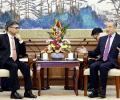
India and China have agreed to rebuild ties and resume people-to-people exchanges, including resuming direct flights and the Kailash Manasarovar Yatra this year. The two countries also discussed the resumption of dialogue mechanisms to address each other's concerns and move relations to a more stable path. The meeting comes after a period of strained relations following the Galwan Valley clashes in 2020.
'It is high time that the 'war on terror' is removed from our diplomatic toolbox.' 'Certainly, our parliamentarians have no role in it,' asserts Ambassador M K Bhadrakumar.
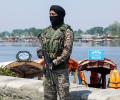
The United Nations Secretary-General, Antonio Guterres, has called for de-escalation between India and Pakistan, expressing deep concern over rising tensions following a terrorist attack in Jammu and Kashmir. Guterres reiterated his condemnation of the attack and urged both sides to avoid a confrontation, which he described as catastrophic. The Secretary-General has also offered his good offices to support de-escalation efforts. The President of the UN General Assembly, Philemon Yang, has also expressed concern over the escalating violence and called for a resolution through diplomatic means. Meanwhile, Pakistan has denied any involvement in the attack and reiterated its commitment to fighting terrorism.
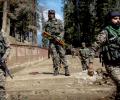
China hopes both sides will remain restrained, move toward each other, and work together to de-escalate the situation.
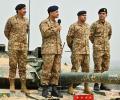
United States President Donald Trump will host Pakistan Army chief Asim Munir for lunch at the White House on Wednesday.
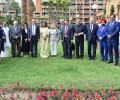
All-party parliamentary delegations on Monday met with the leaders of several countries and highlighted India's resolve to combat terrorism, which they stressed must be eradicated in the interests of all humanity.

"My interview was on March 21, 1977. That was the day the Emergency was revoked. Revoked! So, I go in for an interview at Shahjahan Road... First person that morning," recalls Jaishankar, now 70.
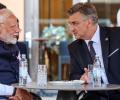
In his media statement following talks with his Croatian counterpart Andrej Plenkovic, Modi said both leaders agree that "terrorism is an enemy of humanity" and is inimical to forces that believe in democracy.
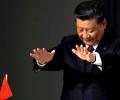
President Xi Jinping has called for better international communication, urging the bellicose official Chinese media and 'wolf warrior' diplomats to adopt a tone that displays openness and conveys modesty, in what observers see as a rare admission of Beijing's growing isolation exacerbated by COVID-19.

In India, the Indian-American diplomat will also meet with senior government officials to discuss the deepening US-India partnership, the state department said in a release on Friday.

Top Canadian officials have accused Union Home Minister Amit Shah of leading a campaign targeting Sikh separatists in Canada, escalating tensions between the two nations.

'We should watch -- in the near term -- for signs that the two have totally fallen out at a personal, political level.' 'Trump and Modi know how to be dealmakers, but they also know how to hold a grudge.'

Lee Jae-myung's decisive victory in South Korea's snap presidential election marks a major political shift driven by public backlash against authoritarian, with significant implications for domestic reform and the future of the US-South Korea alliance, observes Dr Rajaram Panda.
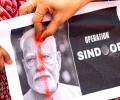
World leaders, including the UN Secretary-General and US President Donald Trump, have urged India and Pakistan to exercise restraint and seek peaceful solutions to the ongoing tensions. The calls for calm come after India conducted airstrikes in Pakistan-occupied Kashmir in response to a recent terrorist attack. Leaders from the US, Russia, UK, China, UAE, Qatar, and Japan have expressed concern over the escalating situation and emphasized the need for dialogue and de-escalation.

The government will send seven all-party delegations to key partner countries, including members of the United Nations Security Council, later this month to convey India's message of zero tolerance against terrorism following the Pahalgam terror attack and Operation Sindoor.
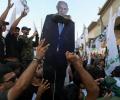
The ministry of external affairs said in a statement that the Indian embassy remains in touch with the community with a view to extend all feasible assistance.
Asked about the expectations from the US, Azar said Washington and Israel are "completely in sync". He said he felt that the US would "support" Israel's action.
Akhtar criticised vested interest groups in Pakistan, particularly the army, the political establishment and the extreme right wing, for blocking peace efforts between the two nations.
The deportation of 104 Indian nationals from the US, followed by another 119 set to arrive in Amritsar on Saturday night, has sparked controversy in India over the treatment of returnees. The US government's intensified crackdown on undocumented immigrants has led to criticism of the use of handcuffs and shackles for deportees, even those who have committed no crimes beyond immigration violations. The issue has led to heated debates in the Indian Parliament, with opposition leaders demanding an inquiry into the deportation process. The Indian government is engaging with US officials to ensure the humane treatment of deportees, while also facing the challenge of reintegrating returnees into Indian society. The deportations highlight the ongoing tension between border control and human rights, and the complexities of US-India relations.
President Pezeshkian on Saturday said that Iran unequivocally denounces such "inhumane acts", Iran's embassy in New Delhi said in a post on X.

India has suspended the Indus Waters Treaty with Pakistan, citing sustained cross-border terrorism and security concerns. The treaty, brokered by the World Bank in 1960, governs the distribution and use of the Indus river and its tributaries between the two countries. India's decision follows a recent terror attack in Jammu and Kashmir, and has been met with strong condemnation from Pakistan.

Prime Minister Narendra Modi on Thursday said India will identify, track and punish every terrorist and their backers who were responsible for the attack in Pahalgam "beyond their imagination". Addressing a public gathering in Madhubani, Modi said, "Today, from the soil of Bihar, I say to the whole world that India will identify, track and punish every terrorist and their backers. We will pursue them to the ends of the earth." He added that India's spirit will never be broken by terrorism and that terrorism will not go unpunished. Modi also assured that every effort will be made to ensure that justice is served, saying that the entire nation stands firm in this resolve. He thanked the people of various countries and the leaders who have stood with India in these times. Earlier, Modi and a large crowd gathered for a National Panchayati Raj Day programme observed silence for a few moments to pay homage to the victims of the terror attack in Pahalgam. Bihar Chief Minister Nitish Kumar condemned the terror attack and told the prime minister that the entire nation was united against terrorism.
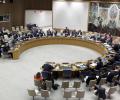
The United Nations Security Council on Monday passed a resolution demanding an immediate ceasefire in Gaza for the month of Ramzan, a breakthrough coming after more than five months since the start of the Israel-Hamas conflict.

India on Thursday resumed its diplomatic presence in Kabul by deploying a team in its embassy in the Afghan capital, over 10 months after it pulled out its officials from the mission following the Taliban's capture of power.
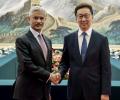
India and China should build on 'good progress' in normalising the bilateral ties to address border-related issues including de-escalation, and it is essential to avoid 'restrictive trade measures and roadblocks', External Affairs Minister S Jaishankar said on Monday during talks with his Chinese counterpart Wang Yi.

The Congress party has claimed credit for the extradition of Tahawwur Rana, an accused in the 2008 Mumbai terror attacks, from the US, saying the Modi government did not initiate the process and merely benefited from the "mature, consistent and strategic diplomacy" begun under the UPA. Former Home Minister P Chidambaram said the government did not secure any breakthrough to make the extradition possible, nor is it the result of any grandstanding. He added that it was a testament to what the Indian state can achieve when diplomacy, law enforcement and international cooperation are pursued sincerely and without any kind of chest-thumping. Chidambaram detailed the UPA government's efforts in securing Rana's extradition, citing the registration of a case against him in 2009, diplomatic pressure on Canada and the US, and continued efforts despite legal setbacks. He highlighted the role of the UPA in securing Rana's conviction for other terrorism-related offences and the cooperation between the US and Indian agencies in gathering evidence and securing his extradition. The Congress leader further stated that it was the UPA's groundwork that paved the way for Rana's extradition, even after the change in government in 2014.
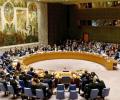
The United Nations Security Council held closed-door consultations on rising tensions between India and Pakistan, with envoys calling for restraint and dialogue. The consultations, requested by Pakistan, lasted for about an hour and a half. UN Secretary-General Antonio Guterres expressed concern over the tensions, urging both countries to avoid a military confrontation. India's former Permanent Representative to the UN, Syed Akbaruddin, said that no consequential outcome could be expected from the discussion.

The closed-door luncheon meeting came amid escalating tensions between Israel and Iran with Trump exploring Washington's possible involvement.
Rediff reports on the reasons behind this dramatic shift.
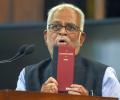
'Earlier, we used to talk about a deficit economy. There is a deficit in democracy' 'If you read superficially Gandhi and Ambedkar and Nehru, some misconceptions and misunderstanding come to mind, as if they were at loggerheads and they differed radically in their views' 'India is one nation. There is only one citizenship. No citizenship for South India and no citizenship for North India and another for the Northeast'
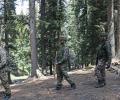
'It is typical of China's strategic deception of making virtue out of necessity,' observes Rup Narayan Das.

Australia will join the United States in a diplomatic boycott of the Winter Olympic Games in Beijing, Prime Minister Scott Morrison said on Wednesday, as other allies weighed similar moves to protest China's human rights record.
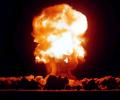
Beijing's latest weapon, 15 times more powerful than TNT, signals a new frontier in high-impact, non-nuclear military technology.
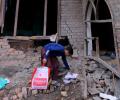
Amid escalating tensions between India and Pakistan, the US has said it will not get involved in the conflict, stressing that it is "fundamentally none of our business." While acknowledging concerns about a potential nuclear war, Vice President J D Vance emphasized that the US cannot control India and Pakistan, but can encourage them to de-escalate. The US has also reiterated its support for direct dialogue between the two countries and encouraged efforts to improve communications.
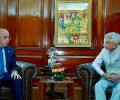
As tensions escalated between India and Pakistan following the deadly Pahalgam terror attack, Iran reached out to both countries, urging de-escalation. Saudi Arabia also expressed concern, with its foreign minister engaging in phone conversations with his Indian and Pakistani counterparts. Iran's foreign minister, Seyed Abbas Araghchi, emphasized the importance of bilateral relations, stating Tehran's willingness to "forge greater understanding" at this critical time. Saudi Arabia's foreign minister, Faisal bin Farhan Al Saud, spoke with both India's External Affairs Minister S Jaishankar and Pakistan's Foreign Minister Mohammad Ishaq Dar. Amidst heightened tensions, India has taken a series of punitive measures against Pakistan, including suspending the Indus Waters Treaty and downgrading diplomatic ties. Pakistan responded by shutting its airspace to Indian airliners and suspending all trade. Both countries exchanged warnings, with Pakistan emphasizing its commitment to "respond firmly to any aggression."
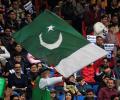
The present government had removed the need for clearance from Dhaka for Pakistani heads of missions while issuing visas, Bangladesh high commissioner to Pakistan Iqbal Hussain told the business community here at the Lahore Chamber of Commerce and Industry on Saturday.
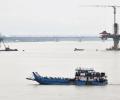
'China could intentionally release excess water.' 'The North East is already flood-prone during the monsoon, and even a controlled release from Chinese dams (during the monsoon) could worsen flooding.'

The United States said it encourages 'direct communication' between India and Pakistan and commends Prime Minister Narendra Modi and Pakistan Prime Minister Shehbaz Sharif for choosing the path of peace.
